Part of our Driving in Malta guide
Valletta parking and the CVA charge explained
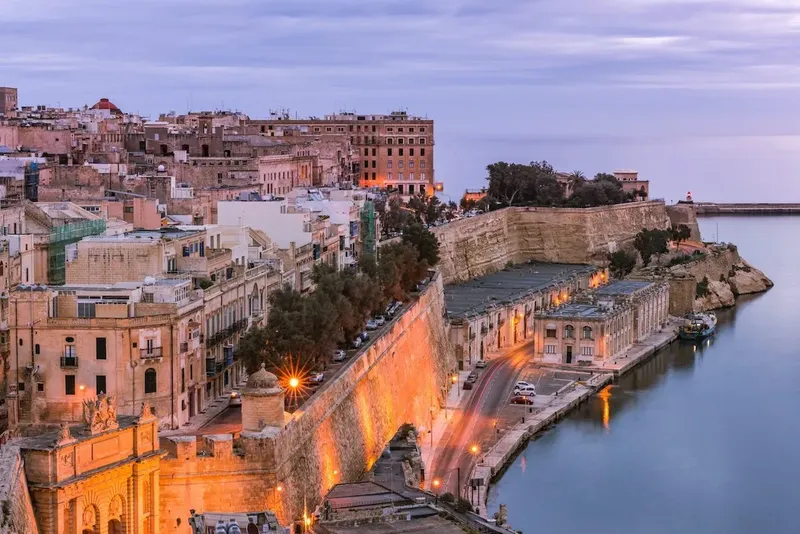
Most of the “can I drive into Valletta” questions we get at the desk in St Julian’s aren’t really about whether you’re allowed in, they’re about the CVA charge and whether it applies to a hire car. It does, and it catches out more visitors than it should, mostly because the rules get garbled between blogs and forum posts. Here’s the straight version, plus the parking move most Maltese drivers actually use instead of paying it. If you’re picking up a car for a Valletta day trip, our St Julian’s collection point is about fifteen minutes from the city gate, so this is worth reading before you set off.
What the CVA actually is
CVA stands for Controlled Vehicular Access. It’s a camera-enforced charging zone around the Valletta peninsula, run by the government’s CVA scheme, not a toll booth or a barrier. ANPR cameras read your number plate at the entry and exit points around the bastion walls, and the system bills the registered keeper of the vehicle automatically. There’s nothing to stop at and nothing to pay on the spot, which is exactly why so many self-drive visitors don’t realise they’ve been charged until later.
What it costs, and when
At the time of writing, the rate is €0.82 per hour, with the first 30 minutes free, and the charge only applies Monday to Friday between 08:00 and 14:00. Outside those hours, on weekday afternoons, and all day on weekends and public holidays, entry and parking inside the CVA zone are free. That’s genuinely useful to know: a lot of the “Valletta is a nightmare to park in” reputation comes from people arriving mid-morning on a weekday, when the charge and the competition for spaces are both at their worst.
We’re flagging this rate and these hours as accurate as of this writing, not as a permanent fact. Government charges do get revised, and the CVA scheme’s own site, cva.gov.mt, publishes the current rate and hours. If you’re planning a trip and the exact euro figure matters to you, check it there before you go rather than trusting any blog, including this one.
Hire cars are not exempt, and that catches people out
Here’s the part that trips visitors up most often: the CVA charge only applies to Maltese-registered vehicles, and a car hired from a Malta-based operator carries Maltese plates. That means our cars, and every other Malta-registered hire car, get treated exactly like a local’s car when they cross into the zone. There is no rental exemption. The exemption people hear about is for foreign-registered vehicles, the ones that arrive in Malta on their own plates (on a ferry, for instance), which the scheme doesn’t charge at all. If you’ve picked up a car in Malta, you’re not driving a foreign-plated vehicle, so that exemption simply doesn’t apply to you.
We mention this because the honest answer, most of the time, is that paying the CVA charge for a short errand inside Valletta isn’t worth the hassle when there’s a free alternative a short walk away.
The easier move: park just outside the walls
Locals mostly solve this by not driving into Valletta at all. The city is small enough to walk from just outside the bastions, and parking there is free of the CVA charge entirely, since you never cross into the zone.
A few options we send guests to:
- Floriana Park & Ride, signposted from Blata l-Bajda just before Porte des Bombes. It’s a large open-air facility across a few zones with well over 700 spaces, a nominal daily fee, and a shuttle bus into Valletta and Floriana on weekdays, so you can leave the car and be at City Gate in a few minutes without touching the CVA zone at all.
- The MCP car park in Floriana, the closest structured parking to Valletta outside the walls, about a three-minute walk to City Gate. Good for a shorter visit where you don’t want to wait for a shuttle.
- On-street parking around Floriana and Blata l-Bajda more generally, where standard white and yellow line rules apply rather than the CVA charge. It fills up by mid-morning on weekdays, so earlier is better.
Park in any of these, walk in through City Gate, and you’ve avoided the charge altogether rather than tracking start and end times against an hourly rate.
A few practical notes from the desk
A couple of things worth knowing before you set off, most of which we cover in more depth in our general driving-in-Malta guide for first-timers:
- The cameras don’t miss you. Don’t assume a quick loop through Valletta on a weekday morning goes unnoticed because there was no barrier. The billing is automatic and retrospective.
- Weekday afternoons and weekends are genuinely free, not just cheaper. If your Valletta visit is flexible, shifting it to a Saturday or a 3pm start avoids the whole question.
- Electric vehicles are exempt under the scheme, though that’s not relevant to our current fleet, which runs on petrol.
- Valletta itself has almost no visitor parking inside the walls. Even without the CVA charge, hunting for a space once you’re in is rarely worth it. Park-and-walk is usually faster door to door than driving in and circling.
If you’re weighing up whether you need a car for your whole Malta trip or just for the days outside Valletta, our general visitor’s guide to getting around Malta covers that decision, and our FAQ page answers the other things people ask us most, deposits, driver age, and insurance among them.
Planning a Valletta day
None of this should put you off driving to Valletta, it just means going in with the same habits a Maltese driver already has: aim for after 2pm or a weekend if you can, and park at Floriana or Blata l-Bajda and walk in if you can’t. If you’re still working out which car suits your trip and where to pick it up, take a look at what’s available on our search page, or send us your dates through the quote form and we’ll talk you through the logistics for wherever you’re headed.
Planning your trip?
Tell us your dates and we will get a car ready at the airport or your hotel. A quick reply by email or WhatsApp.